

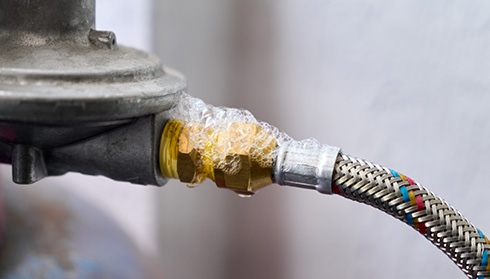
Gas leaks pose a serious risk to your household, even though they are not common. If you notice the smell of gas, hear an unexplained hissing sound, or experience dizziness or headaches inside your home, you need to act quickly. Gas exposure can create dangerous conditions, and responding the right way protects both your family and your property.
This guide explains the warning signs of a gas leak, the steps you should take during an emergency, and how Nuckols Plumbing, Heating & Cooling supports Richmond homeowners with professional repairs and inspections.
Key Signs of a Gas Leak in Richmond Homes
The rotten egg smell is the most recognized sign of a gas leak, but it is not the only one. Utility companies add mercaptan to natural gas to help homeowners detect leaks, yet several other clues may point to a problem:
- Audible sounds – hissing or whistling near appliances, gas meters, or exposed pipes.
- Outdoor changes – bubbling in puddles, dying grass above buried lines, or soil movement.
- Appliance issues – pilot lights that keep going out, unexplained condensation, or weaker performance.
- Physical symptoms – dizziness, fatigue, nausea, or headaches, especially near gas-powered systems.
- Unusual home conditions – unexpected spikes in your gas bill, wilting indoor plants, or sooty marks near appliances.
Richmond’s mix of older homes and modern systems makes awareness especially important. Even subtle changes around your home can point to a slow or hidden leak.
Immediate Actions to Take During a Suspected Gas Leak
Your first priority in a suspected gas leak is to protect the people and pets in your home. Take these steps right away:
- Move everyone outdoors to fresh air immediately.
- Leave doors open behind you but do not attempt to find the source of the leak.
- Avoid flipping switches, plugging in electronics, or lighting any flame.
- Do not use your phone inside—make calls only after you are outside.
Once you are safely outdoors, use your phone to call your local utility company’s emergency line or dial 911. Describe what you smelled, heard, or felt, and report any symptoms. Only return inside once authorities confirm the property is safe.
If you can open windows on your way out without delaying evacuation, do so, but never risk staying inside longer than necessary. Richmond’s older homes often have complex gas lines, so let trained professionals handle inspections and repairs.
Who to Contact First During a Gas Leak
Always call your natural gas utility company first after leaving the house. Richmond Gas Works operates a 24-hour emergency line, and most other suppliers provide similar numbers. If you do not know your utility provider or cannot reach them quickly, call 911.
Emergency responders can shut off service at the street, test the air for safety, and secure the property. After this step, contact Nuckols Plumbing, Heating & Cooling to coordinate professional repairs and inspections once the scene is cleared.
Can You Shut Off the Gas Supply Yourself?
Some homeowners know how to shut off the main gas valve near the meter. You can do this with a wrench by turning the valve a quarter turn until it is perpendicular to the pipe. However, only attempt this if:
- The valve is outside and safe to reach.
- You do not smell strong gas odors in the area.
- You feel steady and are not lightheaded.
If there is any doubt, leave this task to utility crews. Never attempt to restore service yourself—only licensed professionals can safely turn gas back on after a leak.
Activities to Avoid During a Gas Leak
Gas in the air can ignite from even small sparks. During a suspected leak, avoid:
- Turning lights or switches on or off.
- Using your cell phone inside.
- Smoking, lighting matches, or using candles.
- Operating appliances, power tools, or equipment with pilot lights.
- Attempting to fix or locate the leak yourself.
The safest approach is always to evacuate quickly and leave the investigation to trained professionals.
How Gas Leaks Are Detected and Repaired
After the utility company secures your property, licensed technicians perform thorough inspections using specialized equipment. Gas detectors can identify even small leaks hidden inside walls or underground.
Repairs depend on the issue:
- Minor leaks may involve tightening fittings or sealing joints.
- Serious leaks often require replacing sections of corroded pipe or upgrading appliances to current Richmond codes.
Technicians test the system after repairs and only restore gas service once it is safe. At Nuckols Plumbing, Heating & Cooling, our experience with Richmond’s older housing stock allows us to provide reliable repairs and clear communication throughout the process.
Health Risks of Gas Leaks
Gas leaks can affect health in both the short and long term:
- Short-term effects – headaches, dizziness, nausea, breathing trouble, or fatigue.
- Severe exposure – confusion, memory loss, loss of balance, or even unconsciousness in confined spaces.
- Pets – unusual lethargy, vomiting, or breathing problems are warning signs.
- Long-term exposure – low-level leaks may cause chronic headaches, fatigue, and respiratory irritation.
If anyone in your home experiences symptoms, seek medical attention and inform providers about possible gas exposure.
Preventing Future Gas Leaks in Richmond Homes
Prevention is the best way to reduce risks. Richmond homeowners can:
- Schedule annual inspections, especially for older homes.
- Install natural gas detectors near sleeping areas and appliances.
- Test detectors monthly and replace batteries regularly.
- Call 811 before any digging or landscaping project.
- Work with licensed professionals for appliance installations or upgrades.
Nuckols Plumbing, Heating & Cooling offers ongoing maintenance and guidance to keep your home’s gas system safe and reliable.
Common Causes of Gas Leaks in Richmond
Several factors contribute to leaks in Richmond homes:
- Aging pipes – older cast iron or steel systems corrode over time.
- Climate conditions – soil shifts from rain, drought, or freeze-thaw cycles stress underground lines.
- DIY or poor installation – incorrect appliance hookups or unapproved modifications.
- Accidental damage – digging during renovations or landscaping.
Preventive inspections and safe installation practices can help protect your home against these risks.
How Nuckols Plumbing, Heating & Cooling Responds to Gas Leak Calls
When you call Nuckols Plumbing, Heating & Cooling, you connect with a family-owned business deeply rooted in Richmond. We respond quickly, coordinate with emergency crews, and prepare to restore your system once the property is cleared.
Our technicians combine multi-generational knowledge with modern tools for accurate leak detection and dependable repairs. We value clear communication, honest assessments, and solutions that meet Richmond’s safety codes.
Local Emergency Resources
Keep these resources accessible in case of a gas emergency:
- Richmond Gas Works Emergency Line: (804) 646-4646
- Virginia 811 Line: Call before any digging project.
- 911: If you feel unsafe or cannot reach your utility company.
Post these numbers on your refrigerator, program them into your phone, and include them in your family’s emergency plan.
Stay Safe with Local Support
Gas leaks demand immediate action, but you don’t have to handle the aftermath alone. If you suspect a gas leak, need a safety inspection, or want trusted guidance, call Nuckols Plumbing, Heating & Cooling.
Need gas line services in Richmond? Call Nuckols Plumbing, Heating & Cooling at (804) 214-2077 or send us a message online today.